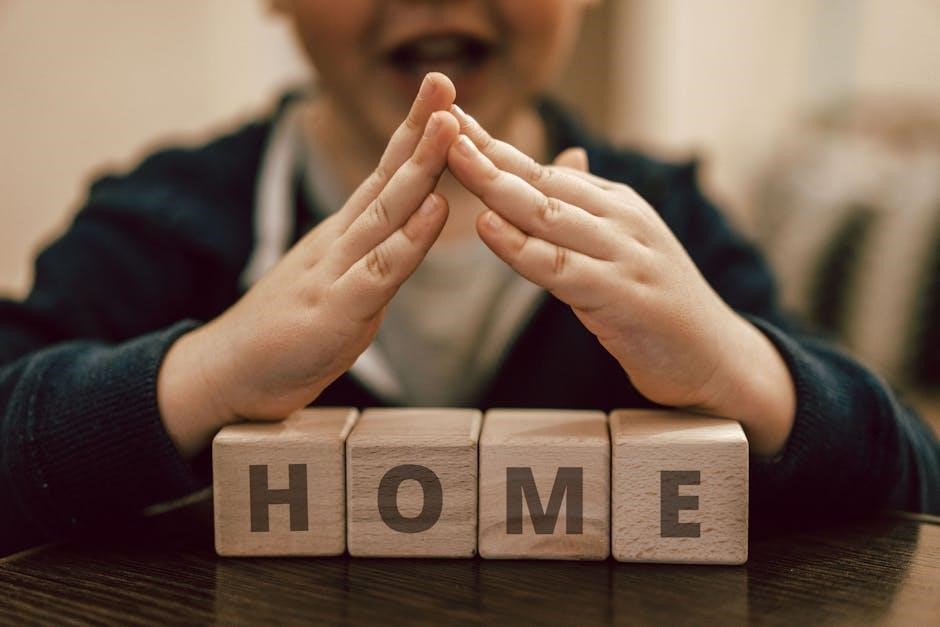
This article delves into a rich lexicon of terms extending beyond the commonplace “home,” drawing from a document detailing fifteen household room descriptors.
It explores the historical nuances and evolving meanings of words used to define dwellings and their constituent spaces, offering a fascinating linguistic journey.
The exploration, sourced from a 2013 Scribd document, reveals how architectural shifts have reshaped our vocabulary, impacting how we perceive and name the places we inhabit.
The Need for Varied Language
The reliance on a single term, like “home,” can limit our ability to fully capture the emotional, functional, and historical significance of a dwelling. A richer vocabulary allows for more precise and evocative descriptions, acknowledging the diverse ways humans create and experience living spaces.
The Scribd document highlights this need, presenting a spectrum of terms – from the formal “residence” to the intimate “boudoir” – each carrying unique connotations. This variety isn’t merely academic; it reflects how societal norms, architectural styles, and personal preferences shape our understanding of where we live.
Furthermore, exploring alternative terminology fosters a deeper appreciation for the evolution of language itself. Words like “parlor” and “nursery” reveal past lifestyles and domestic arrangements, offering glimpses into history. Utilizing a broader range of descriptors enhances communication and allows for a more nuanced portrayal of the human experience within the built environment.
Scope of the Article: Focusing on Rooms and Dwellings
This article concentrates on terminology relating specifically to rooms within a dwelling, and the dwellings themselves, drawing heavily from a document listing fifteen such terms. It won’t delve into broader architectural history or sociological studies of housing, but rather focuses on the linguistic landscape of domestic spaces.
The exploration, based on the Scribd resource, encompasses both common and less familiar words – from the ubiquitous “kitchen” and “bathroom” to the more archaic “boudoir” and “conservatory.” The aim is to showcase the breadth of vocabulary available to describe the places where we live.
The scope is further defined by examining how the meanings of these terms have shifted over time, reflecting changes in house design and societal practices. It’s a focused investigation into the language of home, offering a curated selection of words and their historical contexts.

Historical Terms for Homes
Delving into the past, we uncover evocative terms for homes, like boudoir and parlor, sourced from a document detailing fifteen household room descriptors and their origins.
Boudoir: A Woman’s Private Chamber
Historically, the boudoir represented a distinctly feminine space within a home, a private chamber reserved for the use of a lady of the house. Originating in the French court during the 17th and 18th centuries, it wasn’t merely a bedroom, but a room for intimate conversation, writing letters, and personal grooming.
As detailed in the referenced document outlining fifteen household room terms, the boudoir signified a degree of social status and privacy not universally enjoyed. It often featured luxurious furnishings, delicate décor, and served as a space separate from the more public areas of the house.
Over time, the function of the boudoir has evolved, often merging with the bedroom or becoming a walk-in closet. However, the name retains a sense of intimacy and refined elegance, evoking a bygone era of feminine sophistication and secluded comfort.
Parlor: The Formal Reception Room
The parlor, as highlighted in the document detailing household room terminology, historically served as the “public face” of a home. It was the formal reception room, designed to impress guests and showcase the family’s social standing and refinement. Unlike more casual living spaces, the parlor was reserved for special occasions and receiving visitors.
Originating from the French word “parler” (to speak), the parlor’s primary function was conversation. Furnishings were typically elegant and arranged to facilitate polite discourse, often including ornate furniture, delicate artwork, and carefully chosen accessories. It was a space where social etiquette reigned supreme.
With changing social norms, the parlor’s role diminished, often evolving into a more general living room. However, the term still evokes a sense of formality and a connection to a more structured social past.
Hall: From Great Halls to Entryways
The term “hall” demonstrates a significant evolution in domestic architecture, as detailed in the resource outlining various household room terms. Originally, a “hall” referred to the grand, central space in medieval manors – a ‘great hall’ – serving as the focal point for communal activities like dining, gatherings, and even judicial proceedings.
Over time, particularly with changes in house design, the hall transformed. It gradually diminished in size and function, becoming the entryway or corridor within a home. This transition reflects a shift from public display and communal living to more private and segmented spaces.
Today, a hall typically serves as a transitional area, connecting different parts of the house and offering a first impression to visitors. While lacking the grandeur of its predecessors, it retains a sense of arrival and orientation.
Nursery: Origins and Evolution
Historically, the concept of a dedicated “nursery” is relatively recent, as highlighted by the document detailing household room terminology. In earlier eras, children typically slept in the same rooms as their parents, or with other family members. The emergence of the nursery reflects evolving attitudes towards childhood and a growing emphasis on providing children with their own dedicated space.
Initially, nurseries weren’t solely for sleeping; they often served as general living and play areas for children, overseen by a nanny or governess. As societal norms shifted, nurseries became increasingly focused on child development and education.
Modern nurseries prioritize safety, comfort, and stimulation, often featuring colorful décor, age-appropriate toys, and dedicated areas for play and learning. The evolution of the nursery mirrors changing perceptions of childhood and the importance of nurturing a child’s growth.
Conservatory: Bringing the Outdoors In
The conservatory, as detailed in the household room terminology document, originally served a very practical purpose: the cultivation of plants that required a warmer climate than typically found outdoors. These structures, often attached to the main house, were designed to mimic a greenhouse environment, allowing for year-round gardening.
Over time, the conservatory evolved beyond its purely horticultural function. It became a desirable architectural feature, offering a bright, airy space to enjoy natural light and views of the surrounding landscape.
Today’s conservatories are often used as sitting rooms, dining areas, or even home offices, blurring the lines between indoor and outdoor living. They represent a desire to connect with nature and create a tranquil retreat within the home.

Rooms with Specialized Functions
Certain rooms within a dwelling, as outlined in the document, are defined not by general living but by specific activities – spaces dedicated to hobbies, storage, or utility.
Attic: The Space Under the Roof
The attic, traditionally the space directly beneath a home’s roof, holds a unique position in the architectural vocabulary. The Scribd document highlights it as one of the fifteen household rooms with a distinct identity. Historically, attics weren’t considered prime living areas; instead, they served as storage spaces, often for items infrequently used or of sentimental value.
Over time, however, the attic’s function has evolved. Modern home designs frequently repurpose attics into finished living spaces – bedrooms, home offices, or recreational rooms. This transformation reflects changing needs and a desire to maximize usable square footage. The original purpose, though, remains embedded in the word’s connotation: a secluded, often dusty, area holding remnants of the past.
The attic’s character is often defined by its sloping ceilings and limited accessibility, contributing to its sense of mystery and separation from the main living areas of the house.
Cellar: Below Ground Living
The cellar, as identified in the Scribd document detailing household rooms, represents a space fundamentally different from those above ground. Traditionally, cellars were excavated below the home, primarily for practical purposes – food preservation, particularly in cooler climates, and providing a foundation for the structure above. They often served as storage for root vegetables, canned goods, and, historically, wine.
However, the function of cellars has broadened considerably. Modern cellars are frequently finished into habitable spaces, mirroring the attic’s transformation. These finished basements can include recreation rooms, home theaters, or even additional bedrooms, effectively expanding the living area of the home.
Despite modernization, the cellar retains a certain mystique, often associated with coolness, darkness, and a sense of being removed from the everyday world. Its subterranean location inherently sets it apart.
Den: A Private Retreat
The “den,” as highlighted in the household rooms document sourced from Scribd, historically signified a more intimate and private space within the home. Unlike the formal parlor intended for guests, the den was conceived as a retreat for the family, particularly the male head of household. It served as a study, a place for reading, or simply a room for quiet contemplation.

Over time, the den’s function has evolved, mirroring societal shifts. While still retaining its connotation of privacy, the modern den often functions as a family room or a casual living space. It’s a place for relaxation, watching television, or engaging in hobbies.
The term evokes a sense of comfort and seclusion, a haven from the bustle of daily life. It represents a space designed for personal enjoyment and unwinding.
Library: A Repository of Knowledge
As detailed in the Scribd document outlining household room terminology, the library traditionally represented far more than just a room filled with books. It was a deliberate statement – a repository of knowledge, reflecting the owner’s intellectual pursuits and social standing. Historically, libraries were often grand, imposing spaces designed to showcase extensive collections.
The function of the library has adapted alongside changing lifestyles. While still serving as a space for books, modern libraries frequently incorporate comfortable seating, technology, and multi-purpose functionality. They’ve become spaces for reading, research, and even casual gatherings.
The term “library” continues to evoke a sense of learning and refinement, representing a commitment to intellectual curiosity and the preservation of knowledge within the home.
Kitchen: The Heart of the Home
The Scribd document highlighting various household rooms consistently identifies the kitchen as a central space, and rightfully so. Historically, the kitchen wasn’t always the social hub it is today; it was often a utilitarian space, separated from the more formal areas of the house. However, its fundamental role as the source of sustenance always positioned it as vital.
Over time, the kitchen has evolved into the “heart of the home,” becoming a gathering place for family and friends. Modern kitchen designs emphasize open layouts, encouraging interaction and creating a warm, inviting atmosphere.
This transformation reflects a shift in societal values, prioritizing connection and shared experiences around food and daily life. The kitchen, therefore, embodies both practicality and emotional significance.

Less Common, Yet Descriptive Terms
The document reveals lesser-known terms like foyer, garage, closet, and bathroom, enriching our understanding of domestic spaces and their functions within a residence.
Foyer: Welcoming Guests
The foyer, often the first impression of a home, historically served as more than just a passageway. As detailed in the referenced document, it’s a space dedicated to receiving and welcoming guests, a function subtly embedded within its very name and design.
Originally, a foyer wasn’t simply an entryway; it was a transitional zone, a space to pause and prepare for entering the more private realms of the house. This concept speaks to a time when social etiquette and the presentation of one’s home held significant importance.
Modern foyers may vary greatly in size and style, but the core purpose remains – to offer a gracious welcome. The document highlights how the evolution of home designs has impacted the foyer’s role, sometimes integrating it with larger living areas, yet still retaining its welcoming essence.
It’s a space for first impressions, setting the tone for the experience within.
Garage: Housing for Vehicles
The garage, a relatively modern addition to the home, represents a significant shift in how we interact with our dwellings and transportation. While not explicitly detailed in the historical context of the source document, its emergence is intrinsically linked to the rise of the automobile and changing lifestyles.
Initially, garages were separate structures, simple shelters for vehicles. Over time, they became integrated into the main house, offering convenience and security. This evolution reflects a growing emphasis on practicality and the increasing importance of the car in daily life.

Today’s garages often serve multiple purposes, functioning as storage spaces, workshops, or even extensions of the living area. The document’s broader theme of evolving room definitions clearly applies here, demonstrating how spaces adapt to meet changing needs.
It’s a testament to the dynamic relationship between architecture and technology.
Closet: Storage and Privacy
The closet, a seemingly simple feature of modern homes, represents a fascinating evolution in domestic design and personal habits. While the Scribd document lists “closet” among various household rooms, its historical context is less about a dedicated ‘room’ and more about the increasing need for private storage.

Historically, storage was often public, with chests and wardrobes serving as visible displays of wealth. The development of built-in closets signaled a shift towards more concealed and organized storage solutions, reflecting changing social norms and a desire for privacy.
Closets provide not only a space for belongings but also a degree of personal sanctuary. They represent a contained, private area within the larger domestic space, a place for organization and individual expression.
This evolution mirrors the document’s overall theme of how room definitions adapt to societal changes.
Bathroom: Hygiene and Sanitation
The bathroom, a now-essential room in most dwellings, represents a significant advancement in domestic life, focusing on hygiene and sanitation. The Scribd document acknowledges the bathroom alongside other household rooms, but its history is tied to evolving understandings of public health and personal cleanliness.
Historically, bathing practices varied greatly, often occurring in communal facilities or portable tubs. The development of indoor plumbing and dedicated bathing rooms marked a turning point, improving sanitation and convenience.
The modern bathroom is more than just a functional space; it’s often a private retreat for self-care and relaxation. This evolution reflects a growing emphasis on personal well-being and the integration of comfort into daily routines.
As the document illustrates, room definitions are not static, but rather adapt to changing societal needs and technological advancements.

Archaic and Regional Terms
The document highlights “cottage” and “tenement” as examples of older, regionally-specific terms for dwellings, reflecting historical housing types and societal structures.
“Dwelling” itself serves as a broad, encompassing term.
Cottage: A Rural Dwelling
Historically, the term “cottage” evoked images of modest, rural residences, often associated with agricultural laborers or those living in the countryside. The Scribd document implicitly positions it as an archaic term, suggesting its modern usage carries a romanticized or picturesque connotation rather than its original practical meaning.
Originally, cottages were small, simple structures, built with readily available local materials. They represented a humble abode, distinct from the grander homes of the landed gentry. Over time, the definition has broadened, and “cottage” now frequently describes a charming, cozy house, regardless of location or the occupant’s profession.
The evolution of the term reflects societal changes and a shift in aesthetic preferences. While once denoting a specific type of dwelling tied to a rural lifestyle, “cottage” now often signifies a particular style – one emphasizing comfort, simplicity, and a connection to nature. This illustrates how language adapts alongside evolving architectural designs and cultural values.
Tenement: Historical Housing
The term “tenement” carries a significantly different weight than many other descriptors for homes, as highlighted by the source document’s broader exploration of household room terminology. Historically, tenements represented a specific type of housing – often overcrowded and substandard – prevalent in urban areas, particularly during periods of rapid industrialization and immigration.
These dwellings were typically multi-family buildings, rented out to numerous families, often with limited access to sanitation or adequate living space. The Scribd document implicitly acknowledges this history, positioning “tenement” as a term rooted in a specific socio-economic context.
Unlike “cottage” which gained romantic associations, “tenement” remains largely associated with hardship and poverty. While the term still exists, its usage often evokes a sense of historical injustice and the challenges faced by working-class communities. It serves as a stark reminder of the varying conditions people have historically called “home.”
Dwelling: A General Term for Residence
“Dwelling” stands as a remarkably versatile and encompassing term when considering alternatives to “home,” as evidenced by its inclusion within the broader list of household descriptors sourced from the Scribd document. It functions as a foundational word, representing simply a place where someone lives – a shelter, a residence, a place of abode.
Unlike more specific terms like “boudoir” or “conservatory,” “dwelling” lacks inherent connotations of luxury, function, or social status. It’s a neutral descriptor, applicable to a vast range of structures, from humble huts to opulent mansions. This generality makes it a useful fallback when a more precise term isn’t available or desired.
The document’s inclusion of “dwelling” underscores the importance of having a basic, universally understood term for the concept of a place to live, serving as a linguistic anchor amidst a sea of more nuanced and historically-laden alternatives.
Modern Alternatives & Figurative Language
Contemporary language offers evocative substitutes for “home,” like “residence,” “abode,” “habitat,” and “sanctuary.” These terms, explored in related resources, add depth and nuance to descriptions.
Residence: A Formal Synonym
“Residence” stands as a notably formal and widely accepted synonym for “home,” often employed in official contexts like legal documents, addresses, and property listings. Unlike the emotionally charged “home,” “residence” maintains a detached, descriptive quality, focusing on the physical location where someone lives.
The Scribd document highlighting alternative terms implicitly acknowledges this distinction, presenting “residence” as a straightforward replacement when a less personal tone is desired. It’s a term favored in professional settings and conveys a sense of established occupancy.
However, “residence” lacks the warmth and intimacy typically associated with “home.” It doesn’t evoke feelings of comfort, belonging, or personal history. While accurate, it’s a functional descriptor rather than an emotional anchor. This makes it suitable for practical communication but less effective when aiming to convey the emotional significance of a dwelling.
Ultimately, “residence” serves as a reliable, albeit somewhat sterile, alternative when formality and precision are paramount.
Abode: A Poetic Term for Home
“Abode” presents itself as a distinctly poetic and somewhat archaic alternative to “home,” carrying a weight of history and literary association. The term evokes images of simpler times and a deeper connection to the physical structure of a dwelling. It’s a word rarely used in everyday conversation, lending it an air of elegance and refinement.
As highlighted in the document detailing alternative terms, “abode” emphasizes the being within a space, rather than simply the structure itself. It suggests a place of peaceful existence and quiet contemplation. This contrasts with the more pragmatic “residence” or the functional descriptions of specific rooms.
The use of “abode” often implies a sense of permanence and rootedness, a haven from the outside world. While beautiful, it can feel slightly removed from modern living, better suited to describing a cottage or a secluded retreat than a contemporary apartment.
“Abode” remains a powerful, evocative choice for those seeking a more lyrical expression of “home.”
Habitat: Emphasizing the Living Space
“Habitat” offers a unique perspective, shifting the focus from the building itself to the life contained within. Unlike terms like “residence” or “abode,” which center on the dwelling as a structure or a feeling, “habitat” emphasizes the environment and the needs of those who live there. It’s a term borrowed from the natural world, applied to human dwellings.
The Scribd document’s exploration of alternative terminology reveals how “habitat” highlights the functional aspect of a home – providing shelter, sustenance, and a space for growth. It suggests a harmonious relationship between inhabitants and their surroundings.
This term is particularly relevant in modern discussions about sustainable living and eco-friendly design, where creating a healthy and balanced environment is paramount. It subtly implies responsibility towards maintaining and respecting the living space.
“Habitat” is a compelling choice for those who view their home as an integral part of their lifestyle.
Sanctuary: Home as a Safe Haven
The term “sanctuary” imbues the concept of “home” with profound emotional weight, elevating it beyond mere shelter to a place of refuge and security. It speaks to the fundamental human need for a safe and peaceful environment, a haven from the stresses of the outside world. This resonates deeply with the core purpose of a dwelling.
As highlighted in the Scribd document’s exploration of varied terminology, “sanctuary” suggests a space where one can truly be themselves, free from judgment or harm. It’s a place for restoration, healing, and emotional replenishment.
The evocative power of “sanctuary” is particularly potent in times of uncertainty or upheaval, reinforcing the home’s role as a constant and comforting presence. It’s a word that speaks to the heart, not just the head.
Choosing “sanctuary” to describe one’s home is a powerful statement about its significance.
No Responses