
This worksheet explores angle types, guiding students through identification, measurement, and classification. It offers interactive tasks, visual aids, and practice problems to reinforce concepts and improve geometric reasoning.
Practice measuring angles with protractors and applying angle sum theorems each
1.1 Purpose of the Worksheet
The primary goal of this worksheet is to provide a structured, engaging, and comprehensive learning experience focused on the identification, measurement, and classification of various angle types. By integrating clear definitions, visual representations, and hands‑on activities, students are encouraged to develop a deep, intuitive understanding of geometric relationships and the practical applications of angle concepts in real‑world contexts.
Key objectives include:

- Reinforcing foundational knowledge of acute, right, obtuse, reflex, straight, complementary, and adjacent angles.
- Enhancing measurement skills through the use of protractors, digital tools, and estimation techniques.
- Promoting analytical thinking by requiring students to justify classifications and solve multi‑step problems.
- Encouraging collaborative learning through peer‑review exercises and group discussions.
- Providing immediate feedback via self‑check sections and answer keys to support independent progress.
Throughout the worksheet, learners will encounter a variety of tasks ranging from simple identification drills to complex scenario‑based questions that simulate real‑life scenarios such as architectural design, engineering layouts, and artistic composition. This blend of theory and practice ensures that students not only memorize definitions but also appreciate the relevance of angles in everyday problem solving.
Ultimately, the worksheet serves as a versatile resource for teachers, tutors, and self‑directed learners, offering a balanced mix of instructional content, interactive practice, and assessment tools that collectively foster confidence and competence in geometric reasoning.
Additional support is provided through optional downloadable resources, printable diagrams, and interactive quizzes that can be accessed online. These materials allow for flexible pacing and cater to diverse learning styles, ensuring that every student can engage with the content at a comfortable level.

Overview of Angle Types
This section outlines the main angle categories—acute, right, obtuse, reflex, straight, complementary, and adjacent—defining each with precise criteria and illustrating their relationships through diagrams and practical examples. Students will compare angle measures, classification rules, solve real-world problems .

2.1 Classification Criteria and Key Definitions
Angles are measured in degrees, ranging from 0° to 360°. The classification hinges on the measure:- Acute: >0° and <90°- Right: exactly 90°- Obtuse: >90° and <180°- Straight: exactly 180°- Reflex: >180° and <360°- Complementary: two angles summing to 90°- Adjacent: share a common vertex and side, with no interior overlapKey definitions include vertex, sides, interior, exterior, and the concept of angle sum in a triangle (180°). Understanding these fundamentals allows students to identify, label, and solve problems involving angle relationships in geometric figures.
Additional criteria help students differentiate angles in complex figures. Interior angles are those inside a polygon; exterior angles lie outside, adjacent to an interior angle, and together sum to 360° for any convex polygon. Supplementary angles add to 180°, while complementary angles add to 90°. Adjacent angles share a common vertex and side but do not overlap internally. Reflex angles exceed 180° but are less than 360°, often appearing in star-shaped or circular contexts. Straight angles measure exactly 180°, forming a straight line. Understanding these distinctions enables accurate angle labeling and problem-solving in geometry.
Students should practice by drawing angle diagrams, labeling each type, and verifying measurements with a protractor. When angles are part of a triangle, remember that the sum of interior angles is always 180°, and the sum of exterior angles (one per vertex) equals 360°. Recognizing patterns such as isosceles or right triangles aids in predicting missing angles. Applying these rules consistently strengthens spatial reasoning and prepares learners for advanced geometry topics.
Master builds confidence!!
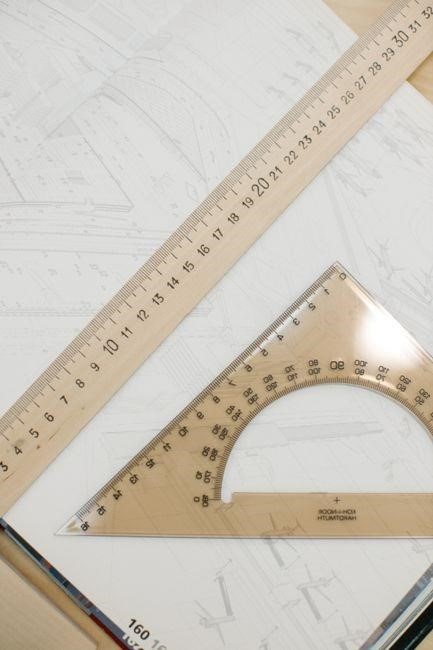
Acute Angles Section
Explore acute angles (<90°) through diagrams, measurement, and practice problems. Students identify, label, and calculate missing values, reinforcing concepts of interior angles and angle sum theorems. Interactive tasks enhance understanding. Students practice measuring angles with tool!

3.1 Definition, Properties, and Worksheet Tasks
Acute angles measure less than 90°. They appear in many geometric figures, such as triangle corners or book openings. In an equilateral triangle each angle is 60°, which is acute. An acute angle is always contained within a larger right or obtuse angle. Students will compare acute angles with right and obtuse angles to deepen understanding further.
- Sum of angles in a triangle: if two angles are acute, the third must also be acute.
- Complementary relationship: two acute angles can form a right angle when added together.
Worksheet tasks focus on identification, measurement, and application. Students will:
- Use a protractor to measure given angles and confirm they are acute.
- Label acute angles in geometric figures and explain why they meet the definition.
- Calculate missing acute angles in triangles using the angle sum property.
These activities reinforce conceptual understanding and develop practical skills in angle measurement and problem solving.

Right Angles Section
Right angles measure exactly 90°, forming a perfect corner. They are fundamental in geometry, used in coordinate axes, squares, and many constructions. In this worksheet, students will identify right angles, use protractors, and solve problems involving complementary pairs and perpendicular lines. Practice now.
4.1 Definition, Properties, and Worksheet Tasks
Right angles are defined by a 90‑degree measure, forming a perfect corner where two lines intersect perpendicularly. They serve as the cornerstone of Euclidean geometry, ensuring consistent right‑angle triangles, square shapes, and orthogonal coordinate systems. Key properties include the fact that the sum of the angles in a right‑angle triangle equals 180°, and that any two right angles together form a straight angle of 180°. In a worksheet context, students will first identify right angles in diagrams, then use a protractor to confirm the 90° measurement. They will practice labeling right angles with the symbol ⊥, and solve problems that require determining whether given angles are right based on contextual clues. Students will also practice drawing right angles with a protractor. The worksheet encourages critical thinking by asking students to explain why a 90° angle is unique, how it differs from acute, obtuse, and reflex angles, and why it is essential in real‑world applications such as architecture, engineering, and computer graphics. By completing these tasks, learners reinforce their understanding of right angles, develop measurement skills, and build a foundation for more advanced geometric concepts. Students will also learn how to use a right‑angle template to construct accurate right angles in drawings, which is a practical skill in drafting and design. This comprehensive approach ensures that learners not only memorize definitions but also apply them in meaningful contexts, fostering a deeper appreciation for the role of right angles in mathematics and everyday life.
Obtuse Angles Section
Explore obtuse angles, defined as greater than 90° and less than 180°. The worksheet guides students to identify, measure, and classify obtuse angles using protractors. Activities include drawing, labeling, and comparing obtuse angles with acute and right angles. They note obtuse angles exceed right angles very.
5.1 Definition, Properties, and Worksheet Tasks
Obtuse angles, those exceeding 90° but falling short of 180°, play a pivotal role in geometry and real‑world design. Their larger measure distinguishes them from acute and right angles, and their presence often signals a structural or aesthetic choice that demands careful analysis. In a triangle, an obtuse angle forces the other two angles to be acute, ensuring the triangle remains valid while offering a unique shape that can be leveraged in architectural blueprints, artistic compositions, and engineering calculations. Students learn to identify obtuse angles by measuring with a protractor, noting that the vertex lies on the opposite side of the triangle’s base, and recognizing that an obtuse angle subtends a major arc in a circle. The worksheet tasks encourage hands‑on practice: students must locate obtuse angles in a series of diagrams, calculate their degree measures, and compare them to adjacent acute angles. They also explore how an obtuse angle can be part of a larger polygon, such as a pentagon or hexagon, and determine the implications for the sum of interior angles. By completing a series of fill‑in‑the‑blank questions, students articulate why an obtuse angle cannot coexist with all equal angles in a regular polygon, reinforcing the concept that regularity requires equal angles. The final reflection prompts learners to consider how obtuse angles influence the stability of structures, the flow of light in architectural spaces, and the depth perception in visual art, thereby connecting abstract geometry to tangible contexts. Students learn to apply obtuse angles design!!!
Reflex angles exceed 180° but are less than 360°, forming the larger part of a full rotation. Students identify them by measuring with a protractor and noting the vertex lies on the opposite side. The worksheet includes diagrams, fill‑in‑the‑blank tasks, and a reflection prompt on real‑world applications such as!!
6.1 Definition, Properties, and Worksheet Tasks
Reflex angles are formed when the measure of an angle exceeds 180° but remains less than 360°. They are the larger portion of a full rotation, leaving the smaller, or acute, counterpart on the opposite side of the vertex. In a standard diagram, a reflex angle is drawn with a larger arc that sweeps beyond the straight line created by the angle’s sides.
Key properties include:
- Measure always greater than 180° but remains less than 360°.
- Complementary to an acute or obtuse angle that sums to 360°.
- Can be expressed as 360° minus the corresponding interior angle.
- In triangle contexts, a reflex angle cannot exist because the sum of interior angles is 180°.
Worksheet tasks focus on identification, measurement, and application: These tasks help students link reflex angles to real-life contexts daily.
- Using a protractor, measure the given reflex angles and record their degrees.
- Convert reflex angles to their equivalent acute or obtuse angles by subtracting from 360°.
- Determine whether a set of angles can form a reflex angle in a polygon.
- Apply reflex angle concepts to real‑world scenarios such as clock hands, rotating machinery, or architectural designs.
- Create a diagram that shows a reflex angle and labels its vertex, sides, and arc.
Students are encouraged to reflect on how reflex angles differ from other types and to practice converting between forms to solidify understanding.

Straight Angles, Complementary, and Adjacent Angles
This worksheet section covers straight angles (180°), complementary pairs summing to 90°, and adjacent angles sharing a common side. Students practice identifying each type, measuring with protractors, and solving problems that combine these concepts in geometry. It includes diagrams and practice problems. tips
7.1 Definition, Properties, and Worksheet Tasks
Definition of a straight angle: an angle that measures exactly 180°, formed by two rays that lie on the same line and extend in opposite directions. Complementary angles: two angles whose measures add up to 90°. Adjacent angles: two angles that share a common vertex and a common side, but do not overlap. Properties: a straight angle is a linear pair with its supplement; complementary angles are acute and sum to a right angle; adjacent angles can be part of a larger angle or a linear pair. Worksheet tasks include measuring angles with a protractor, identifying straight, complementary, and adjacent angles in diagrams, constructing complementary pairs using a right angle as a reference, and solving problems that require determining missing angle measures based on given relationships. Students will also practice labeling angles, using algebraic expressions to represent unknown measures, and verifying solutions by checking angle sums. This section reinforces spatial reasoning and the application of angle sum theorems in practical contexts. The worksheet provides step‑by‑step prompts: 1) Identify a straight angle in a given figure; 2) Calculate the missing complementary angle when one angle is 35°; 3) Verify that two adjacent angles of 70° and 110° form a straight angle. By completing these tasks, students gain confidence in angle measurement, classification, and the logical reasoning required for geometry.
Students construct complementary pairs by bisecting a right angle and identify adjacent angles forming a straight angle. The worksheet uses algebraic notation to solve unknown angles, linking geometry and algebra practice daily

No Responses