
Welcome! This manual provides essential information for your 2014 Ford Focus, ensuring safe and enjoyable operation. It details features, maintenance, and troubleshooting guidance for optimal vehicle performance.
Overview of the Manual’s Purpose
This 2014 Ford Focus Owner’s Manual serves as a comprehensive guide to understanding and operating your vehicle effectively. It’s designed to familiarize you with all the features, controls, and systems, promoting confident and safe driving experiences; The manual details routine maintenance procedures, helping you preserve your Focus’s reliability and longevity.
Beyond operation, this resource explains important safety precautions, warning labels, and potential hazards associated with vehicle use. It provides clear instructions for troubleshooting common issues and offers guidance on what to do in emergency situations. Understanding the information within will empower you to maximize your vehicle’s performance and ensure a secure journey. Refer to this manual regularly for optimal ownership and to address any questions that may arise during your time with your 2014 Ford Focus.
Important Safety Precautions
Prioritize safety! Your 2014 Ford Focus is equipped with numerous safety features, but responsible operation is paramount. Always wear seatbelts, and ensure all passengers do the same, during every trip. Never operate the vehicle under the influence of alcohol or drugs. Be aware of your surroundings and maintain a safe following distance.

This manual highlights critical warnings regarding airbags, child safety seats, and proper vehicle loading. Familiarize yourself with these precautions to minimize the risk of injury. Never modify safety-related components. Regularly inspect tires for proper inflation and tread depth. Understand the limitations of the vehicle’s safety systems and drive defensively. Ignoring these precautions could result in serious injury or death. Always consult a qualified technician for repairs and maintenance related to safety systems.

Understanding Your Vehicle
Explore your Focus! This section details the vehicle’s components, controls, and systems, helping you become fully acquainted with its features and operation.
Dashboard Symbols and Indicators
Decoding the Lights: Your 2014 Ford Focus’s instrument cluster utilizes a variety of symbols and indicators to communicate vital information about the vehicle’s status. Understanding these warnings is crucial for safe operation and preventative maintenance. Solid colors generally indicate normal operation, while flashing lights often signify a potential issue requiring immediate attention.
Key Indicators: The check engine light illuminates when the powertrain control module detects a malfunction. The ABS light signals a problem with the anti-lock braking system. A low tire pressure warning indicates insufficient pressure in one or more tires. The battery warning light signifies a charging system issue. Pay close attention to symbols related to safety systems like airbags and seatbelts.
Refer to the Manual: A comprehensive list and detailed explanation of each symbol can be found within the dedicated section of your owner’s manual. Ignoring dashboard warnings can lead to more significant and costly repairs, or even compromise your safety. Regularly familiarize yourself with these indicators.
Keyless Entry and Remote Start System
Convenience at Your Fingertips: The 2014 Ford Focus offers a keyless entry system, allowing you to unlock and lock your vehicle without physically using a key. Simply having the key fob in your possession enables operation. The remote start system, if equipped, allows you to start the engine from a distance, pre-conditioning the cabin for comfortable temperatures.
Fob Operation: Familiarize yourself with the functions of your key fob, including lock, unlock, panic button, and remote start (if applicable). Ensure the battery in the fob is functioning correctly for optimal range. Programming additional fobs or replacing a lost fob requires a specific procedure outlined in the owner’s manual.
System Limitations: Be aware of the system’s range and potential interference. Avoid using the remote start system in enclosed spaces. Always ensure the area around the vehicle is clear before initiating remote start. Refer to the manual for detailed instructions and safety precautions.
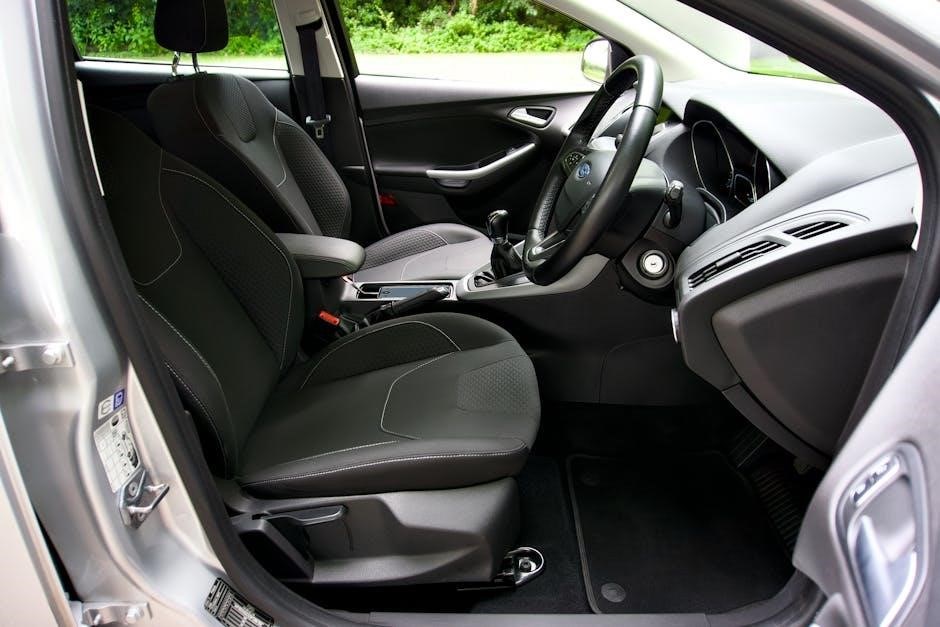
Operating Your 2014 Ford Focus
Let’s Drive! This section details the proper procedures for starting, driving, and utilizing the various features of your 2014 Ford Focus vehicle.
Starting and Stopping the Engine
Starting Your Focus: Ensure the vehicle is in Park (P) or Neutral (N), and your foot is firmly on the brake pedal. Insert the key into the ignition or, if equipped, press the start button while depressing the brake. The engine will crank and start. Allow the engine to run for a short period before driving, especially in cold weather.
Stopping the Engine: To safely stop the engine, bring the vehicle to a complete stop. Shift the transmission into Park (P) and firmly apply the parking brake. Turn the ignition key to the OFF position or press the start/stop button. Ensure the vehicle is completely stopped before exiting.
Important Reminders: Never start or stop the engine while the vehicle is in motion. Always ensure the parking brake is engaged when parking on an incline. Familiarize yourself with the location of all controls before operating the vehicle.
Driving Modes (Standard, Sport, Manual)
Standard Mode: This is the default driving mode, optimized for everyday driving conditions. It provides a balance of fuel efficiency and performance, suitable for most situations. The steering feel is comfortable, and throttle response is moderate.
Sport Mode: Engaging Sport Mode enhances the driving experience by sharpening throttle response and increasing steering weight. This mode delivers a more dynamic and engaging feel, ideal for spirited driving. Fuel economy may be reduced in Sport Mode.
Manual Mode (Automatic Transmission): If equipped with an automatic transmission offering manual control, you can shift gears manually using the selector lever or paddle shifters. This allows for greater control over engine RPM and gear selection.
Automatic Transmission Operation
Shift Lever Positions: Your 2014 Ford Focus’s automatic transmission features several positions: P (Park), R (Reverse), N (Neutral), and D (Drive). Always come to a complete stop before shifting between these positions. ‘M’ may be present for manual shift mode.
Drive (D): This is the standard position for forward driving. The transmission automatically selects the appropriate gear based on vehicle speed and throttle input.
Kick-Down: Firmly pressing the accelerator pedal beyond the normal range will initiate a “kick-down,” causing the transmission to downshift for increased acceleration.
Manual Shift Mode: Some models offer a manual shift mode, allowing you to select gears manually using the shift lever or paddle shifters. Refer to the ‘Driving Modes’ section for details.

Fluid Check: Regularly check the automatic transmission fluid level to ensure proper operation. Consult the ‘Maintenance and Care’ section for instructions.
Manual Transmission Operation (if applicable)
Shifting Gears: To shift gears smoothly in your 2014 Ford Focus with a manual transmission, depress the clutch pedal fully and move the shift lever to the desired gear. Release the clutch pedal gradually while simultaneously applying gentle pressure to the accelerator.
Gear Selection: Familiarize yourself with the gear pattern displayed on the shift knob. Avoid abrupt shifts and ensure the engine speed matches the selected gear for optimal performance.
Downshifting: Downshifting is useful for slowing down or gaining more power. Match the engine speed to the lower gear by briefly blipping the throttle during the clutch engagement.
Hill Starts: Use the handbrake to prevent rolling backward when starting on a hill. Coordinate releasing the handbrake with engaging the clutch and accelerator.
Clutch Adjustment: The clutch should engage smoothly throughout its travel. If adjustment is needed, consult a qualified technician.

Maintenance and Care
Protect your investment! Regular maintenance, as outlined in this manual, is crucial for the longevity, safety, and reliable performance of your 2014 Ford Focus.
Recommended Maintenance Schedule
Maintaining peak performance for your 2014 Ford Focus requires adherence to a specific maintenance schedule. This schedule, detailed within this owner’s manual, is categorized by mileage intervals – typically every 5,000, 7,500, 10,000, 15,000 miles, and beyond.
Essential services include regular oil and filter changes, tire rotations, and fluid level checks (coolant, brake fluid, power steering fluid, and windshield washer fluid). Inspections of belts, hoses, brakes, and exhaust systems are also vital.
More extensive services, like spark plug replacement, air filter changes, and transmission fluid flushes, are recommended at higher mileage intervals. Following this schedule helps prevent costly repairs, ensures optimal fuel efficiency, and maintains the resale value of your vehicle. Consult the detailed chart within the manual for a comprehensive breakdown of each service and its corresponding mileage.

Checking and Changing Engine Oil
Regular oil checks and changes are crucial for your 2014 Ford Focus’s engine health. To check the oil, park on a level surface and allow the engine to cool. Locate the dipstick, remove it, wipe it clean, reinsert fully, and then remove again to read the level. It should fall between the “MIN” and “MAX” marks.
For oil changes, the manual recommends using a specific oil type and viscosity (typically 5W-20). Drain the old oil completely, replace the oil filter with a new one, and then refill with the correct amount of fresh oil.
Proper disposal of used oil is essential for environmental protection – take it to a designated recycling center. Refer to the manual’s detailed instructions and diagrams for precise locations of the drain plug and filter, and always use appropriate safety precautions.
Tire Pressure Monitoring System (TPMS)
Your 2014 Ford Focus is equipped with a Tire Pressure Monitoring System (TPMS), designed to alert you when tire pressure is significantly low. Maintaining correct tire pressure improves fuel efficiency, handling, and tire life. The recommended tire pressure is found on a sticker located on the driver’s side doorjamb, not on the tire sidewall.

The TPMS light on the dashboard illuminates when pressure is low in one or more tires. After inflating tires to the correct pressure, you may need to drive a short distance to reset the system. Some models require a manual reset procedure outlined in the owner’s manual.
Regularly check tire pressure, especially with temperature changes, as pressure fluctuates. Ignoring the TPMS warning can lead to uneven wear, reduced braking performance, and potential tire failure.

In-Car Technology
Explore connectivity! Your 2014 Ford Focus boasts advanced features like the SYNC system and Bluetooth, enhancing your driving experience with seamless integration.
SYNC System – Features and Operation
The SYNC system is your 2014 Ford Focus’s intelligent connectivity system, designed to keep you connected and entertained while on the road. It allows hands-free calling, audio streaming, and voice control of various functions. Utilize voice commands to make calls, play music from connected devices, and access other features without taking your hands off the wheel.
Key features include Bluetooth connectivity for pairing your smartphone, USB ports for media playback, and access to apps through voice commands. The system also offers emergency assistance features, like 911 Assist, which can automatically call for help in the event of a severe accident. Familiarize yourself with the voice command structure for optimal use. Explore the settings menu to personalize your SYNC experience, adjusting preferences for audio, display, and phone connectivity. Regular software updates, when available, can enhance SYNC’s functionality and performance.
Bluetooth Pairing and Usage
Pairing your Bluetooth device with your 2014 Ford Focus’s SYNC system enables hands-free calling and audio streaming. To initiate pairing, access the “Phone” menu on the SYNC display and select “Add Device.” Ensure your phone is in discovery mode – consult your phone’s manual for instructions. SYNC will search for available devices; select your phone when it appears on the screen.
You may be prompted to enter a PIN displayed on both the SYNC screen and your phone to confirm the connection. Once paired, your phone’s contacts and call history will be accessible through SYNC. To stream audio, select your phone as the audio source within the SYNC system. Remember to prioritize safety; avoid manipulating your phone while driving. SYNC allows voice commands for calls and music, minimizing distractions. You can manage paired devices within the SYNC settings, removing or renaming them as needed.

Troubleshooting and Emergency Assistance
Facing issues? This section offers guidance for common problems like jump starts and flat tires, alongside emergency contact information for peace of mind.
Jump Starting Procedures
Caution: Jump starting can be hazardous. Follow these steps carefully to avoid injury or damage to your vehicle’s electrical system. Ensure both vehicles are turned off and not touching. Connect the red (positive) cable to the positive terminal of the discharged battery, then to the positive terminal of the good battery.
Next, connect the black (negative) cable to the negative terminal of the good battery, and then to a grounded metal surface on the disabled vehicle – not the negative battery terminal. Start the vehicle with the good battery and let it run for a few minutes. Attempt to start the discharged vehicle.
If it doesn’t start immediately, wait a few more minutes and try again. Once started, disconnect the cables in the reverse order of connection. It’s recommended to have the battery and charging system checked by a qualified technician after a jump start.
What to Do in Case of a Flat Tire
Safety First: If you experience a flat tire, safely pull over to a level surface away from traffic. Activate your hazard lights. Engage the parking brake firmly. Locate your spare tire, jack, and lug wrench – typically found in the trunk. Consult your owner’s manual for specific locations.
Before jacking up the vehicle, loosen the lug nuts on the flat tire. Position the jack according to the manual’s instructions. Raise the vehicle until the flat tire is off the ground. Fully remove the lug nuts and carefully remove the flat tire. Mount the spare tire, hand-tighten the lug nuts, and lower the vehicle.
Once on the ground, fully tighten the lug nuts in a star pattern. Stow the flat tire and tools. Remember, a spare tire is often for temporary use only; have the flat tire repaired or replaced as soon as possible.
No Responses